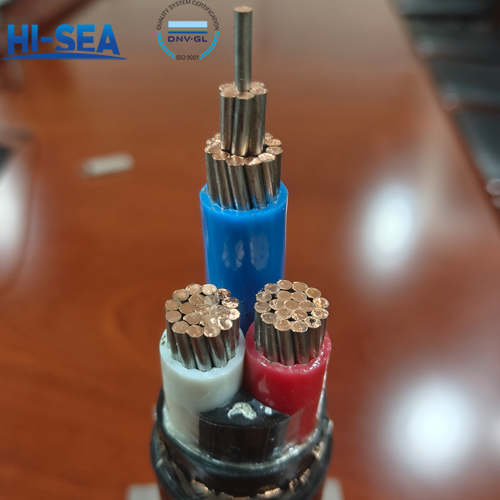
Why Do Marine Cables Use Stranded Copper Conductors
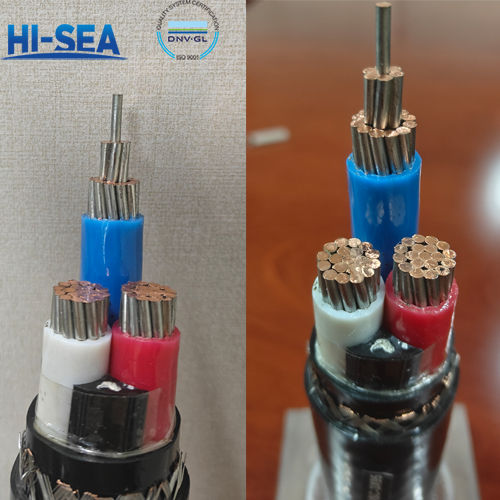
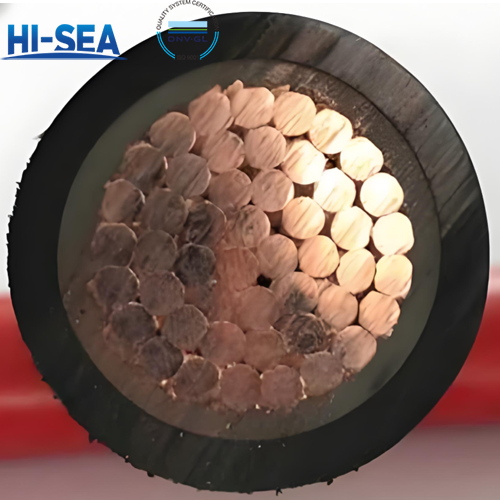
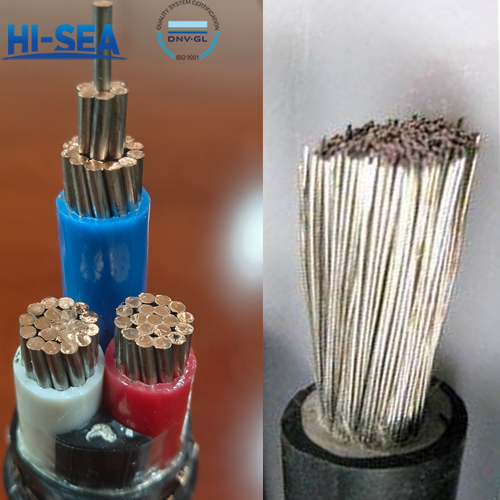
The marine cables use a stranded conductor, which is based on the comprehensive consideration of the mechanical, electrical, and installation performance of the cable under special working conditions of the ship. Its main advantages are as follows:
Overview
1. Excellent mechanical flexibility
The cabin space of the ship is narrow, and the cable laying path is complex and winding. Stranded conductors consist of multiple thin copper wires, significantly improving the flexibility and bendability of the cable, making it easy to adapt to small radius bending installation. Compared to a single large cross-section conductor, the stranded structure fundamentally solves the problem of being thick and hard, greatly reducing the difficulty and labor intensity of cable laying.
2. Excellent anti vibration and reliability
Mechanical vibration and impact persist during ship operation. The individual wires in the twisted conductor are mutually supported and relatively independent, so even if long-term vibration causes individual wires to crack slightly, it will not immediately cause overall fracture, effectively preventing sudden power outages. This redundant structure ensures the continuity and safety of power transmission.
3. Improve electrical performance and heat dissipation
There is a "skin effect" in AC power transmission, and the twisted structure can fully utilize the surrounding cross-section to improve the effective utilization rate of the conductor. At the same time, the small gaps between multiple wire cores increase the heat dissipation area, which is conducive to reducing the operating temperature rise and ensuring the long-term stable operation of the cable.
4. Enhance comprehensive mechanical strength
The twisting process significantly improves the overall tensile strength of the conductor, enabling it to cope with the traction force during ship laying and mechanical stress during operation, and avoiding damage to the insulation layer due to conductor deformation.