
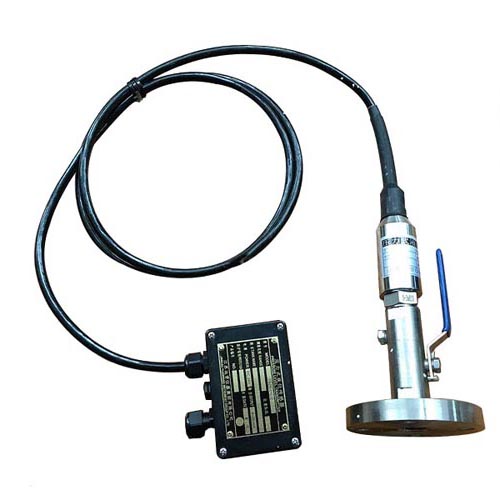
Pressure Level Transmitter 4-20mA
What is a 4-20mA Pressure Level Transmitter?
A 4-20mA Pressure Level Transmitter is an electronic device used to measure the level of a liquid, slurry, or solid in a tank, silo, or other vessel. It does this indirectly by measuring the hydrostatic pressure exerted by the material.
The "4-20mA" refers to its output signal: it converts the measured pressure into a proportional 4-20 milliamp DC electrical current loop.
Overview
How It Works: The Basic Principle
The core principle is simple: The pressure at the bottom of a tank is directly proportional to the height of the fluid above it.
This is described by the formula:
P = ρ × g × h
• P: Hydrostatic Pressure
• ρ (rho): Density of the fluid
• g: Gravitational acceleration
• h: Height (or level) of the fluid
Since the density (ρ) and gravity (g) are constant for a given application, the pressure (P) is a direct indicator of the fluid level (h).
The Components and The 4-20mA Loop
A typical system consists of:
1. The Transmitter: This is the main device, usually mounted at or near the bottom of the tank. Inside, it has:
◦ Sensor: A diaphragm that flexes with pressure.
◦ Electronics: Converts the diaphragm's movement into an electrical signal.
◦ Current Regulator: The key component that adjusts the current in the loop to be between 4 and 20 mA.
2. The Power Supply: A DC power source (typically 24V DC) that provides energy for the entire loop.
3. The Loop Wiring: A simple two-wire circuit that carries both the power and the signal.
4. The Receiver/Controller: This could be a PLC (Programmable Logic Controller), DCS (Distributed Control System), or an indicator. It reads the current signal and converts it into a meaningful value (e.g., meters, liters, or percentage).