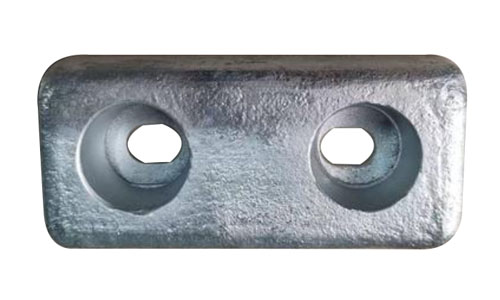


Key Points about Aluminum Anodes and Zinc Anodes
Aluminum anodes and zinc anodes can both be used in sacrificial anode cathodic protection, typically in marine engineering, ship equipment, etc. But how should one choose between them, and what are the differences between these two types of sacrificial anodes?
First, the first question we encounter is whether both anodes can be used in a saltwater environment. The answer is yes, but these two anodes are not interchangeable; they each have their own characteristics and usage requirements. Which sacrificial anode to use depends on the salinity of the water where the ship is located. In brackish water, where salinity is very low and resistivity is high, aluminum anodes are more suitable.
Overview
What are the basic differences between aluminum anodes and zinc anodes?
Capacity: Aluminum anodes have a much higher capacity per unit weight than zinc anodes. Compared to zinc anodes, aluminum anodes corrode more slowly and have a longer lifespan, which alone can significantly reduce costs. The corrosion behavior of zinc anodes differs from that of aluminum anodes; zinc anodes dissolve more uniformly and thoroughly, while aluminum anode corrosion is generally uneven, with distinct 'pits'.
Weight: Aluminum has a significantly lower density than zinc, resulting in lower transportation costs.
Price: Currently, due to metal prices, zinc anodes are typically more expensive than aluminum. Because zinc anodes have a higher density, their freight costs are often higher than those of aluminum anodes.
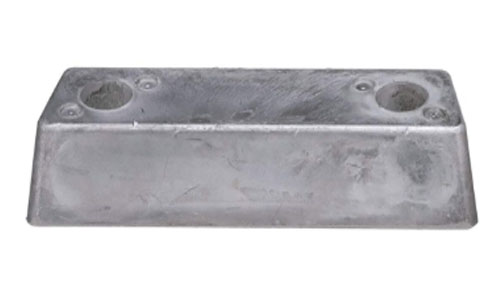
Appearance: Aluminum anodes often appear whiter than zinc anodes, but zinc anodes generally have a more glaring luster.
Aluminum Anode | Zinc Anode |
|
|
Applications: Zinc anodes are only effective in saltwater, whereas aluminum anodes can be used in both saltwater and low-salt water.
Composition: Zinc anodes contain cadmium, copper, iron, aluminum, and other elements. In contrast, aluminum anodes do not contain cadmium but instead include other active components such as indium and silicon, making aluminum anodes more environmentally friendly.
Quality: The quality of any anode is crucial. Whether choosing zinc or aluminum anodes, the grade and composition of the anode are key determinants of its effectiveness. Some suppliers use scrap metal in the manufacturing process, which may result in lower metal quality and more impurities, reducing the anode's capacity. These inexpensive anodes often do not meet required standards, let alone certification.
Are zinc anodes and aluminum anodes environmentally friendly?
Aluminum anodes are more environmentally friendly than zinc anodes. Aluminum anodes do not contain cadmium, which is harmful to marine life. In zinc anodes, cadmium is necessary to ensure the anode dissolves at the appropriate rate; pure zinc anodes would corrode very quickly.
What are the environmental hazards of cadmium?
Cadmium is a naturally occurring element found in some foods. It has many uses, including in paints, batteries, and electroplating. However, it is toxic and carcinogenic. While it is used worldwide, minimizing cadmium deposition in water, air, and land globally is crucial, just as with any other environmentally harmful activity.
Why is cadmium used in anode production?
Zinc anodes are not made solely of pure zinc; they require other elements to convert their performance into high-performance zinc anodes. Why not simply remove cadmium from zinc anodes? As mentioned earlier, it is a fundamental element for producing high-quality zinc anodes, so removing it would reduce the anode's operational capacity. Manufacturers are experimenting with other components to make cadmium-free zinc anodes, but until suitable alternatives are found, zinc will continue to be used in zinc anode production.
Summary of characteristics of aluminum anodes:
1. Used in saltwater and brackish water.
2. High capacity: Three times that of zinc anodes of equal weight.
3. Aluminum anode activity remains consistent; it can maintain activity even when exposed to air and will continue working upon re-immersion in water. If a zinc anode is removed from water, it may form an oxide film that reduces its activity.
4. Aluminum anodes are typically cheaper than zinc anodes.
5. Aluminum anodes last longer, reducing the need for frequent replacement and thus lowering maintenance costs.
6. Cadmium-free.
Summary of characteristics of zinc anodes:
1. Can only be used in saltwater.
2. Due to its density and structure, it has better resistance to water flow impact than aluminum anodes, which is crucial in marine environments.
3. Potential decay on the anode is more uniform.