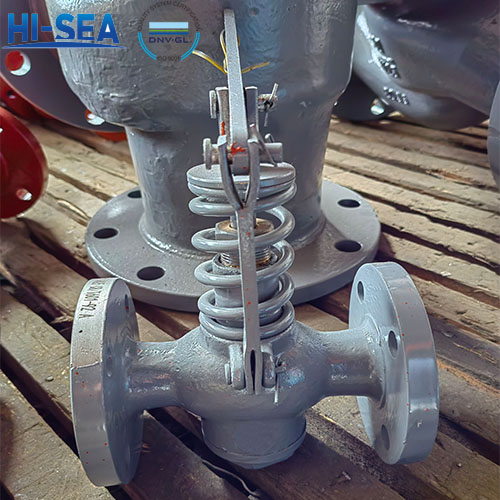

Marine Cast steel Self Closing Valve
Typical Applications on Board Ships:
1. Fuel Oil Service: On transfer, supply, and overflow lines from bunker stations to settling/day tanks.
2. Lubricating Oil Systems: On lines from storage tanks to purifiers and main engine.
3. Tank Vent Lines: On top of fuel and lube oil tanks to prevent overpressure.
4. Cargo Systems: On chemical or product tankers for certain lines (with appropriate material trim).
5. Engine Room Critical Systems: Anywhere automatic closure is required for safety or operational security.
Overview
Safety & Regulatory Features
• Fail-Safe Operation: Designed to close automatically in case of fire (spring thermal release) or system failure, preventing the spread of fire or flooding.
• SOLAS & Classification Society Compliance: Manufactured to meet stringent regulations from the International Maritime Organization (SOLAS) and classification societies (ABS, DNV, Lloyd's, etc.), especially for services like fuel oil lines, lubricating oil lines, and tank venting.
• Fire-Safe Design: Often certified to API 607/API 6FA or equivalent standards. Features include graphite gaskets/packing, metal-to-metal secondary seals, and springs that can withstand high temperatures.
Construction & Durability Features
• Material: Body and bonnet are made from cast steel (e.g., ASTM A216 WCB) for high strength, toughness, and durability in the harsh marine environment. It is suitable for a wide range of pressures and temperatures.
• Corrosion Resistance: Exterior surfaces feature a thick, marine-grade coating (epoxy or similar). Internals may be stainless steel trimmed for corrosive cargo or seawater service.
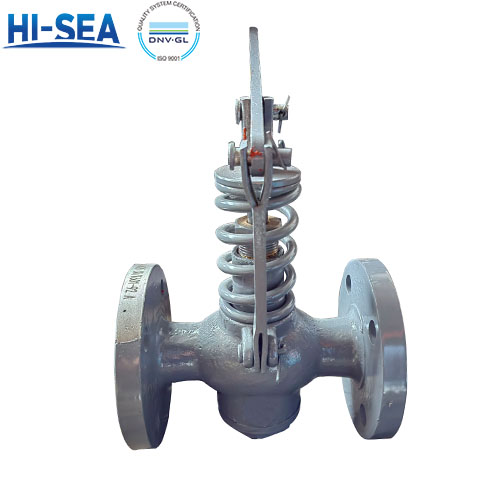
• Robust Stem & Spring Assembly: Hardened stem and a heavy-duty spring made of corrosion-resistant material (often stainless steel) to ensure reliable self-closing action over thousands of cycles.
Image of Marine Cast steel Self Closing Valve