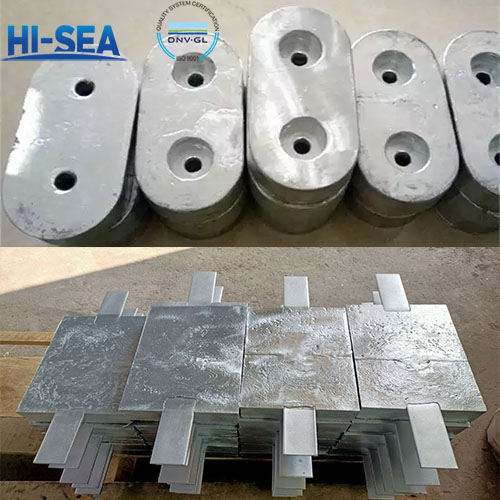
What is Marine Aluminum Anode?
Aluminum anode is a kind of sacrificial anode, also known as aluminum alloy sacrificial anode, aluminum sacrificial anode, aluminum block, etc. It is called a sacrificial anode because it corrodes itself, sacrificing itself and protecting more important metals or equipment. Aluminum anodes are one of the commonly used sacrificial anodes that can be applied to many types of industrial equipment to protect them from corrosion.
Overview
Principle
The principle is based on galvanic corrosion. Aluminum in the anode alloy is more electrochemically active (anodic) than the steel it is meant to protect. When both are electrically connected and immersed in an electrolyte (seawater), a galvanic cell is formed:
At the anode (Aluminum): Oxidation occurs: Al → Al³⁺ + 3e⁻. The aluminum corrodes, releasing electrons.
At the cathode (Steel): The released electrons flow through the metal connection to the steel surface, where they participate in reduction reactions (e.g., with oxygen), thereby suppressing the steel's own corrosion reaction.
In essence, the aluminum anode sacrifices itself by corroding in a controlled manner, thereby providing a protective electrical current that stops the corrosion of the connected steel structure.
Common Applications
Aluminum anodes are commonly used for the cathodic protection of:
Ship hulls and propellers
Seawater pipelines and cooling systems
Ballast tanks and internal water tanks
Offshore oil & gas platforms
Harbor and dock facilities
The Benefits of Using Aluminium Anodes
1. aluminium anodes are more active than zinc or magnesium anodes;
2. unlike magnesium anodes, they do not spark in salt or brackish water;
3. aluminium anodes have a longer life span and are the only type of anode that can be used in any body of water (e.g. fresh, brackish or salt water).
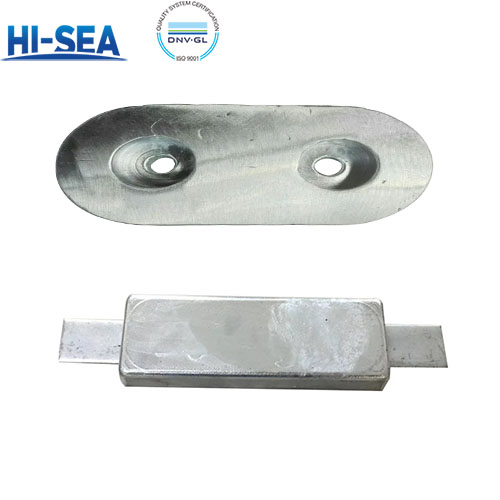
Pictures of Marine Aluminum Anode