Understanding D-Shackles: Key Differences Between Major Standards
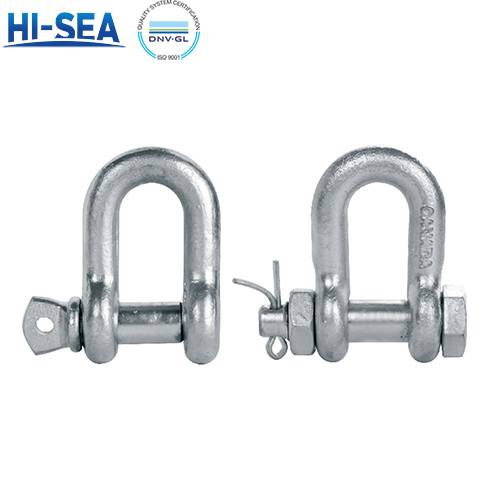
When sourcing D-shackles for global projects or equipment, you’ll encounter products manufactured to different regional standards, such as GB (China), US Federal Spec, DIN (Germany), BS (UK), and JIS (Japan). Understanding the differences between these standards is crucial for ensuring safety, compatibility, and optimal performance in your specific application.
Overview
D-shackles under these standards differ primarily in four key aspects, which directly impact their suitability for various tasks:
1. Material & Chemical Composition: The specific grades of steel or alloy used.
2. Working Load Limit (WLL) Ratings: The rated safe working load for a given shackle size.
3. Dimensions & Tolerances: Physical specifications like pin diameter, bow width, and length.
4. Safety Factor: The ratio between the minimum breaking force and the WLL.
Most of the GB standard shackles are Q235 high-strength carbon steel. The US Federal spec standard shackle body is generally forged with 45 steel, and the transverse pin is 40Cr. The strength of the US Federal spec standard shackle seems to be more advantageous, but the overall load of the US Federal spec standard shackle is lower than that of the GB standard shackle. In some heavy load lifting operations, the GB standard shackle is better choice.