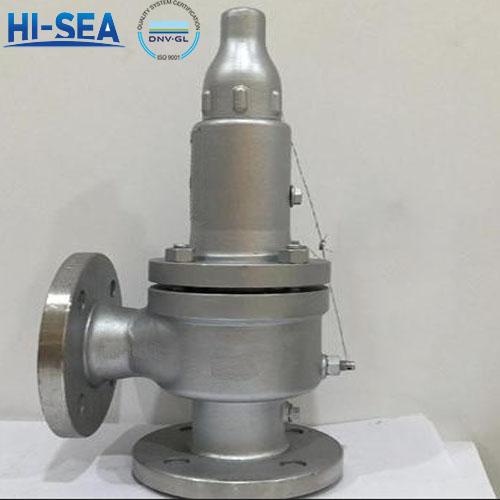
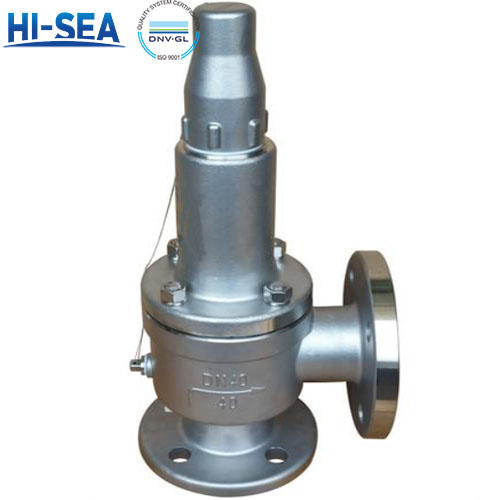
Stainless Steel Safety Valve
Performance and Application Features
.Versatility: Suitable for a vast range of media: steam, air, gases, hot water, chemicals, corrosive fluids, and cryogenic (low-temp) services.
.Leak-Tightness: Provides excellent sealing before reaching the set pressure, minimizing product or energy loss.
.Repeatable Performance: Designed to perform its open-close cycle reliably and consistently over many cycles, with minimal deviation in set pressure.
Overview
Core Functional Features (Why They Are "Safety" Valves)
Automatic Pressure Relief: The primary function. It opens automatically when the system pressure exceeds a pre-set set pressure, preventing catastrophic failure.
Precise Set Pressure: Engineered and calibrated to open at a very specific pressure. This setting is tamper-resistant in certified valves.
Full-Lift or Pop Action: Most safety valves open rapidly ("pop") to their full lift position to achieve maximum flow capacity and quickly reduce pressure.
Re-sealing (Blowdown): After relieving pressure, they must re-close tightly at a pressure (the reseat pressure) lower than the set pressure. This "blowdown" difference ensures stability and prevents chattering.
Overpressure Capacity: Certified valves (ASME, PED) are designed to handle flows that can reach 110% of the maximum allowable working pressure (MAWP) without further pressure rise.
Material and Construction Features (Why "Stainless Steel")
Corrosion Resistance: The most critical advantage. Stainless steel (typically grades 304, 316, 17-4PH) resists rust and corrosion from water, steam, chemicals, acidic/alkaline environments, and marine atmospheres.
High-Temperature Strength: Maintains mechanical integrity and creep resistance at much higher temperatures than materials like brass or carbon steel.
Hygienic & Cleanable: Non-porous, smooth surface is ideal for sanitary applications (food & beverage, pharmaceuticals, biotech). Can be electropolished for easy cleaning and sterilization (CIP/SIP).
Durability & Longevity: Excellent resistance to wear, pitting, and galling, leading to a longer service life in harsh conditions.
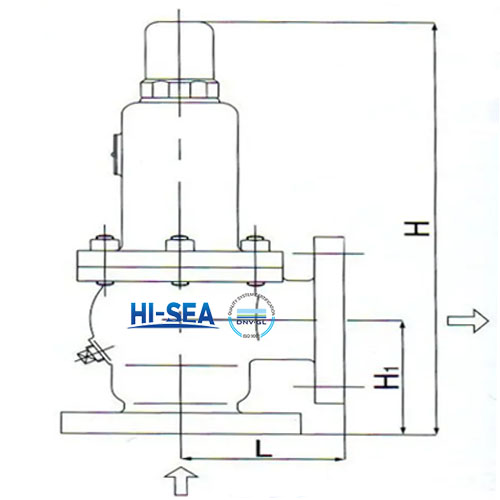
Drawing:
Picture: