
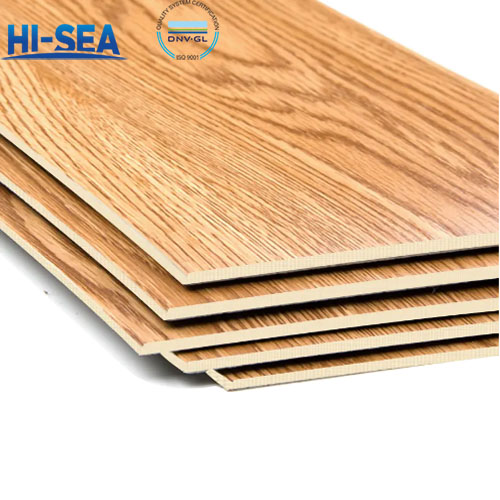
Marine PVC Flooring
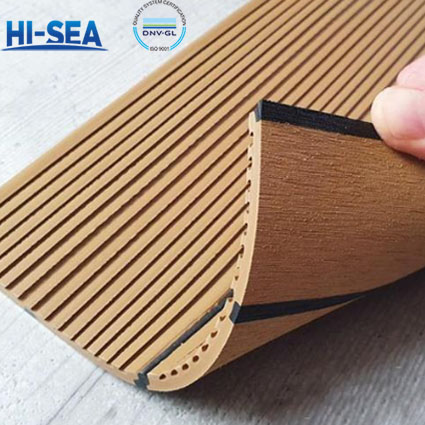
Marine PVC Flooring takes polyvinyl chloride and its copolymer resin as the main raw material, adds fillers, plasticizers, stabilizers, colorants and other auxiliary materials, and is produced on a sheet-like continuous substrate by the coating process or by the calendering, extrusion or extrusion process. It is generally made of multi-layer structure stacked together, usually with wear-resistant layer, glass fiber layer, elastic foam layer, base layer and so on.
Overview
Hi-sea Marine PVC Flooring is IMO FTPC Code 2010 compliant fire retardant vinyl flooring, specifically engineered for cruise ships, passenger ferries, naval vessels and offshore accommodation modules. Unlike commercial PVC flooring, it meets strict international maritime safety standards for flame spread, smoke emission and toxicity.
Application
1. Luxury Cruise Ships/Ro-Ro Passenger Ships: Meets SOLAS 90 high fire protection standards, the preferred choice for accommodations on cruise ships of 25,000 tons and above. Single-ship supply record: 8,500㎡, covering crew quarters, passenger corridors, restaurants, theaters, and spa areas. Low VOC emissions, does not affect air quality in enclosed spaces.
2. Merchant Ships/Cargo Ships: Standard configuration for living quarters on bulk carriers, container ships, and oil tankers. Resistant to diesel splashes and seawater moisture, does not crack during polar routes at -30℃. Anti-static specifications are optional for engine room and control room.
3. Navy/Government Vessels: Dedicated for shipboard living quarters, command rooms, and medical bays. Low-smoke, non-toxic formula, clear visibility during fire, toxicity index <1.5 (IMO requirement ≤5.0). Passes ship roll and vibration environmental adaptability tests.
4. Marine Engineering Platforms: Living modules for jack-up platforms and semi-submersible platforms. Resistant to 1000 hours of salt spray, 0% mold growth rate. Matched to the thermal expansion coefficient of steel decks, preventing bulging under extreme temperature differences.
5. Yachts/Sailboats: Custom wood grain, stone grain, and solid colors available; 2.0mm thickness reduces load. Owner's logo and name can be molded. Factory-cut patterns minimize on-site waste.
6. Ferries/Ro-Ro Ships: High-frequency foot traffic areas; T-grade abrasion resistance, no bottom exposure for 10 years. Anti-slip strips optional for ramps and stair treads.
Advantages
1. Plastics are not easy to decompose and there is no possibility of rusting like iron. It is difficult to be corroded.
2. PVC flooring is non-absorbent and also moisture-proof. Even in the bathroom can be used without worry.
3. In the production of the material, no matter what color, or pattern is needed, it can be made eventually.
4. PVC flooring is light and flat, so it is relatively simple in the installation process.
Picture