Forged Shackle Quality: How Heat Treating Ensures Strength & Safety
Shackles are the critical link in your lifting, rigging, and marine operations. A failure is not an option. While design and material matter, the manufacturing process is what unlocks a shackle's true potential for safety and longevity. At Hisea Marine, we go beyond basic standards by mastering advanced forging and heat treatment to deliver unmatched reliability.
The two non-negotiable metrics for any shackle are tensile strength and tempered hardness. Strength determines the load it can hold, while hardness determines its resistance to wear, deformation, and cracking. Achieving the perfect balance is where science meets craftsmanship.
Overview
Scientific analysis reveals that the quality of shackles is primarily dependent on the hardness after quenching. HI-SEA Marine’s shackle body is forged from high-quality carbon steel, and the manufacturing process involves forging quenching and tempering. Hot forging and quenching is a typical high-temperature deformation heat treatment process with a high austenitizing temperature. It significantly improves the toughness of the steel, especially its low-temperature impact toughness.
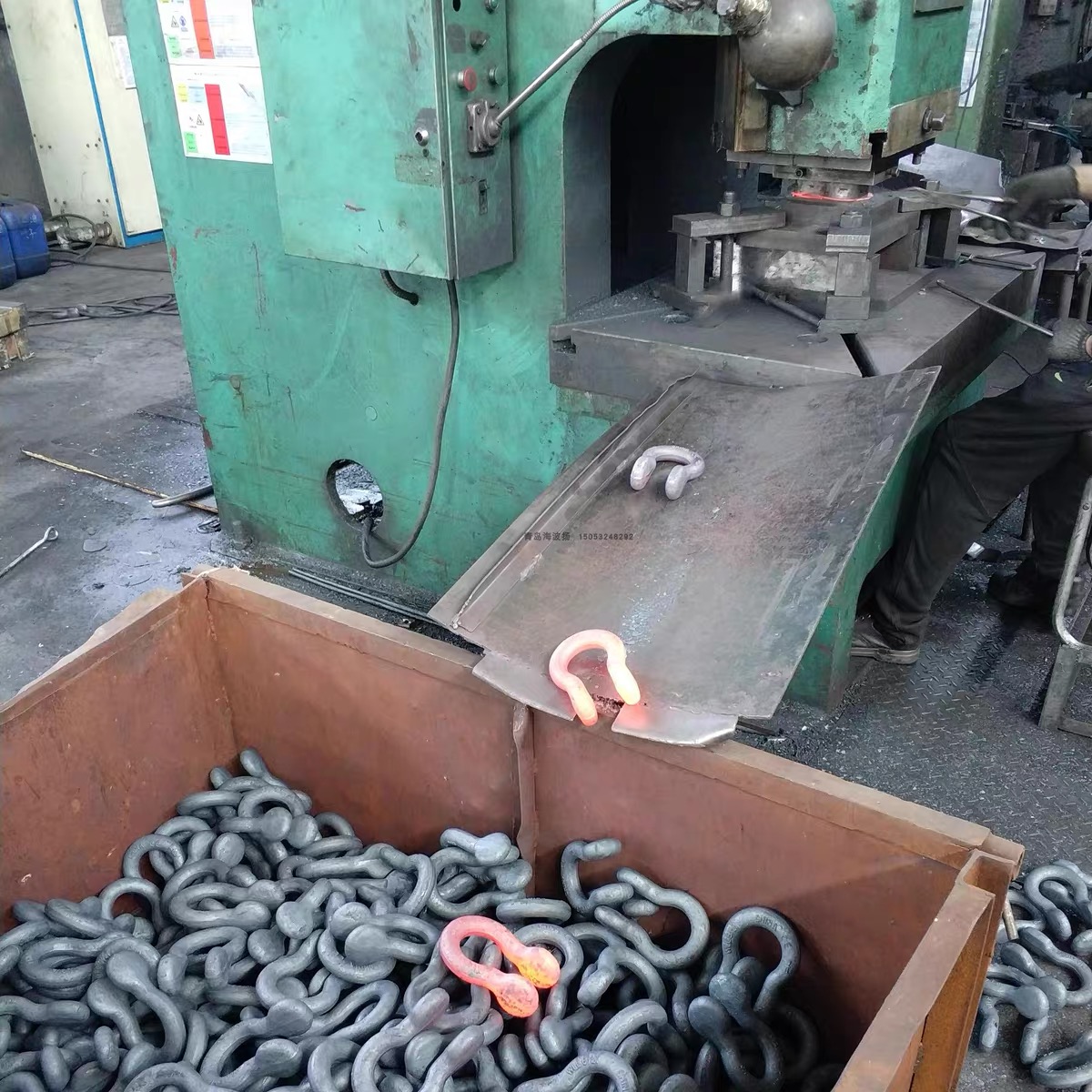
Hot forging and quenching provide a dual effect of deformation strengthening and heat treatment strengthening. This process utilizes the residual heat in the forging to directly quench it, which slows down the cooling rate and improves the overall quenching of the shackle.
The tempering stability of hot forging and quenching effectively reduces stress and enhances the toughness of the steel. After hot forging, quenching, and high-temperature tempering, D shackles can indirectly extend their service life.
Let’s see how the shackle is produced: